How Long Does Heroin Stay in Your System? Heroin Half-Life

Medical Providers:
Dr. Michael Vines, MD
Alex Spritzer, FNP, CARN-AP, PMHNP
Clinical Providers:
Natalie Foster, LPC-S, MS
Last Updated: October 4, 2025

In 2021, about 1.1 million people in the U.S. reported using heroin. Heroin is a powerful drug that is highly addictive and often brings devastating consequences, from health problems to overdose and even death. If you’ve found yourself searching for answers like “how long does heroin stay in your system,” it may be a sign you’re facing a drug test or struggling with use. Take this as a chance to pause and recognize the need for support. With opioid-related overdoses claiming more than 80,000 lives in 2023 alone, the risks are real. You don’t have to become part of that statistic—Arizona IOP is here to help you take the first step toward recovery.

Our Heroin Addiction Treatment Programs

Using heroin and don’t know where to turn? See how Arizona IOP can help.

The length of time heroin stays in your system isn’t the same for everyone. It depends on a number of factors, like how much was used, how it was taken, and the body’s metabolism. On average, heroin can be found in urine for up to 3 days, in the blood for about 6 hours, and in hair for as long as 90 days.

Several factors can influence how long heroin shows up in drug tests, including:

a large quantity of different kinds of medicine piled together

Using larger amounts of heroin can make it stay in the body longer.

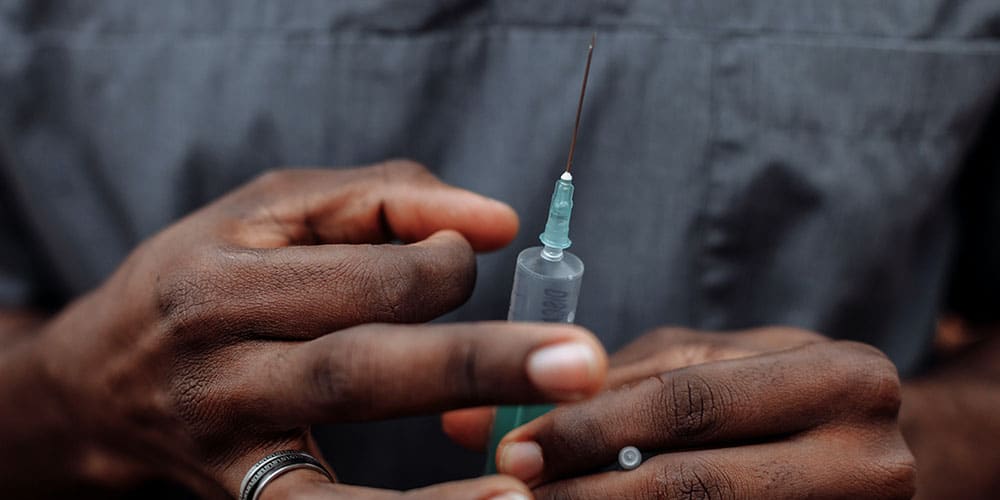
a man is holding a prepared needle for injection

Injected heroin usually remains in the body longer than when it’s snorted or smoked.

a woman running can be associated with a higher metabolic rate

Those with faster metabolisms process and clear heroin more quickly than those with slower metabolisms.

a hand holding a lot of medicines that can interfere with each other

Certain medications, like methadone or buprenorphine, can affect how heroin is detected in the body.

Other factors can also influence how long heroin is detected in the body, such as:

a man who is feeling dehydrated and wiping off his sweat due to intense exercising

When the body is dehydrated, it holds on to fluids, which can make drug detection harder.

a woman participating in an exercise session along with other people

Regular exercise can boost metabolism, helping the body clear drugs more quickly.

a man feeling a lot of pain from his illness

Being sick can slow metabolism, making it harder for the body to clear drugs.

a person holding a medicine and taking it for medication

Certain medications can interfere with how drugs are detected in the body.

If you’re worried about having heroin in your system, consider speaking with your doctor or a drug testing professional. They can explain what affects detection and guide you toward the most reliable testing options.

The term “half-life” refers to how long it takes the body to remove half of a drug. For heroin, the half-life is very short—about 8 to 22 minutes. For example, if someone takes 100 milligrams of heroin, only about 50 milligrams remain after 22 minutes, then around 25 milligrams after another 22 minutes, and so on.

This short half-life plays a major role in both the drug’s effects and its risks, as it determines how long the effects of the drug last. Because heroin leaves the body quickly, people may feel the need to use it more often. With repeated use, the drug can build up in the system and reach dangerous levels. This buildup greatly increases the risk of overdose, which can be life-threatening.

That said, the half-life of heroin—and other drugs—can change depending on different factors. For example:

  • Metabolism: People with faster metabolisms tend to clear heroin more quickly than those with slower metabolisms.
  • Body composition: Those who are overweight or obese may experience a longer half-life for heroin.
  • Health conditions: Liver or kidney disease can slow the body’s ability to process heroin, extending its half-life.

Understanding half-life can give you a clearer picture of how long heroin may affect your body. However, it’s important to note that drug test detection windows often last much longer than the drug’s half-life. Let’s break this down further.

Choose recovery over heroin. Start your journey towards a brighter future.

Many different factors influence how long heroin can be detected in the body. Things like your height, weight, frequency of use, and even whether other substances are involved all play a part. Still, one of the most important factors is the type of drug test being used.

Let’s go over the most common drug tests to better understand how long heroin can stay in your system.

Urine testing is one of the most common ways to detect heroin. In most cases, heroin can be found in urine for up to 3 days after use. The exact window, however, can vary depending on factors like how much was taken, a person’s metabolism, and the type of test being used.

During a urine test, an individual provides a sample that is analyzed for heroin and other substances. If heroin is present, the test will show a positive result. A positive test can carry serious consequences—ranging from employment issues to legal or family-related challenges—making it even more important to seek support if you’re struggling with use.

Saliva tests can detect heroin for up to 24 hours after use. The exact detection time depends on several factors, such as how much heroin was used, the person’s metabolism, and the type of test given.

For this kind of test, a sample is usually collected with a cheek swab or by spitting into a tube. The sample is then analyzed to check for heroin or other substances. If heroin is found, the result will come back positive.

Blood tests can usually detect heroin for up to 2 days after use, though the exact timeframe depends on factors like how much was taken, the individual’s metabolism, and the type of test performed.

These tests are generally done by a medical professional, who draws a small blood sample from a vein in the arm. The sample is then sent to a lab for analysis to check for heroin and other substances.

Hair testing has the longest detection window for heroin, often up to 90 days after use. Still, the exact timeframe can vary depending on how much heroin was used, a person’s hair growth rate, and the type of test being performed.

For this test, a technician will typically cut a small sample of hair from the head, which is then sent to a lab for analysis. Because of its long detection period, hair testing is often used to identify patterns of repeated drug use rather than single instances.

If you’re searching for answers about how long heroin stays in your system because of an upcoming drug test, it may be a sign that heroin use is taking control. The risks of overdose and harmful side effects are real—don’t wait until it’s too late to seek support.

At Arizona IOP, located in Scottsdale, Arizona, we specialize in outpatient addiction treatment that fits into your life while giving you the tools to recover. Our program combines evidence-based therapies with holistic approaches, creating a well-rounded path to healing. You don’t have to face this alone—call our team today and take the first step toward lasting recovery.

The answer to “how long does cocaine stay in your system” is that cocaine is usually detectable in urine for about 2 to 4 days after use. However, its metabolites—substances left behind as the body processes the drug—can remain for several weeks. The exact detection window depends on factors like how much was used, how often, individual metabolism, and other personal differences.

The answer to “how long does ecstasy stay in your system” is that MDMA, commonly known as Ecstasy, is typically detectable for about 2 to 4 days. During this time, traces of the drug can show up in urine, blood, or saliva tests. However, factors like your metabolism, overall health, and how much you’ve taken can all influence how long it remains in your body.

The answer to “how long does meth stay in your system” is that methamphetamine, or meth, is usually detectable for about 2 to 4 days. In some cases, it can be found for up to a week, depending on factors like the amount used, your metabolism, and the type of drug test given.

The answer to “how long does alcohol stay in your system” depends on several factors, including how much you’ve had and your individual metabolism. On average, alcohol can be detected in urine for up to 48 hours and in blood for around 12 hours. Heavy drinking, however, can extend these detection times even further.

The answer to “how long does alcohol stay in your system” can differ from person to person. Factors like how much you drink, how often, and your metabolism all play a role. On average, alcohol shows up in urine for up to 48 hours and in blood for about 12 hours. In cases of heavy drinking, detection times may last even longer.

The answer to “how long does Suboxone stay in your system?” can vary depending on the individual. In most cases, Suboxone can be detected in urine for several days, and sometimes longer. While naloxone, one of its ingredients, usually leaves the body within about a day, buprenorphine—the other key ingredient—can remain longer, which is why the effects may last beyond the typical detection window.

The answer to “how long does fentanyl stay in your system” is that the drug and its metabolites are usually detectable in urine for about 1 to 2 days after use. However, this window can shift depending on factors like dosage, how often it’s used, your metabolism, and the type of drug test performed.

The answer to the question, “how long do opioids stay in your system”, depends on several factors, including the type of opioid, how much was taken, individual metabolism, and the kind of drug test being used. In general, opioids can be detected in urine for about 2 to 4 days after use. However, certain opioids with longer half-lives may remain detectable for a longer period of time.

The answer to the question, “how long does weed stay in your system”, depends on factors such as frequency of use, dosage, and individual metabolism. In general, marijuana can be detected in urine for up to 30 days, especially in regular or heavy users. For infrequent users, it may only be detectable for a few days to about a week.

The answer to the question, “how long does Ambien stay in your system”, is that Ambien (zolpidem) has a short half-life and typically stays in your body for about 8 hours, which is why its effects wear off relatively quickly. However, drug tests can still detect it beyond that time. In urine, Ambien may be detectable for up to 72 hours after use, depending on factors like dosage, frequency of use, age, and individual metabolism.

The answer to the question, “how long does methadone stay in your system”, is that methadone can typically be detected in urine for up to 7–10 days after the last dose. However, this window can vary based on factors such as your metabolism, dosage, and frequency of use. In hair follicle tests, methadone may be detectable for several months, making it one of the longer detection methods.

The answer to the question, “how long does Percocet stay in your system”, is that Percocet can usually be detected in urine for about 3–4 days after the last dose. However, the exact detection window may vary based on factors such as individual metabolism, dosage, frequency of use, and the sensitivity of the drug test being used.